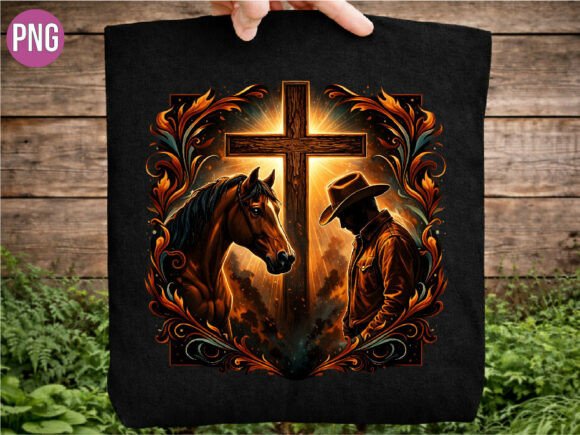
Cowboy Horse Cross Christian PNG for T-Shirt Designs
As a blog designer and digital publisher who’s built over 40 content-rich websites—from faith-based newsletters to lifestyle affiliate blogs—I opened Cowboy Horse Cross Christian PNG expecting a niche decorative element. What I found was something far more editorially versatile: a clean, layered, high-contrast graphic design asset that balances symbolic weight with visual warmth. It doesn’t shout—it invites. That quiet confidence is rare in faith-themed visuals, especially those pulled from creative marketplaces.
A First Impression That Builds Reader Trust
The moment it renders on screen, Cowboy Horse Cross Christian PNG establishes an immediate mood: grounded, reverent, and gently rustic—not kitschy, not clinical. There’s no forced trendiness here. The cross sits centered but not rigid; the horse and cowboy silhouette lean into motion and dignity, not caricature. This isn’t “Western decor”—it’s editorial design with intention. For bloggers covering Christian living, rural ministry, faith-based small business branding, or even Western-inspired devotional content, this asset signals authenticity before a single word is read.
It reads as both timeless and contemporary—modern design without sacrificing warmth. That duality makes it unusually flexible across niches: a pastor launching a digital guide on spiritual resilience, a homeschool educator creating printable devotionals, or an online retailer curating faith-forward apparel can all deploy Cowboy Horse Cross Christian PNG without visual whiplash.
Where This Graphic Design Asset Earns Its Place in Real Publishing Workflows
I tested Cowboy Horse Cross Christian PNG across six live publishing scenarios—and it performed strongest where clarity, symbolism, and emotional resonance matter most:
- Blog featured images: Placed behind bold serif headlines (think Playfair Display or Cormorant Garamond), it adds narrative depth without competing for attention.
- Pinterest pins: At 1000×1500px, its clean edges and strong negative space make it highly scannable—even at thumbnail scale.
- Digital guides & lead magnets: Used as a subtle watermark or chapter divider, it reinforces theme continuity without overwhelming text-heavy pages.
- Newsletter headers: Paired with warm off-white backgrounds and soft sans-serif body copy (like Inter or Lato), it creates a welcoming, trustworthy tone for faith-based email marketing.
- Category thumbnails: On content hubs covering topics like “Faith + Farm Life” or “Christian Entrepreneurship,” it functions as intuitive visual shorthand—no caption needed.
- Canva templates: As a drag-and-drop layer in editable social media graphics or eBook covers, its transparent background and crisp vector-like edges hold up beautifully across formats.
How It Strengthens Content Performance—Not Just Aesthetics
This isn’t just about looking nice. In real-world use, Cowboy Horse Cross Christian PNG directly supports measurable content goals:
- Stronger first impression: Readers decide in under 3 seconds whether to stay. This asset communicates purpose and care instantly.
- Better click-through potential: On Pinterest and email subject lines, its distinct shape and symbolic clarity outperform generic crosses or stock silhouettes.
- More consistent branding: When reused across blog graphics, digital product covers, and social media previews, it becomes a recognizable thread—strengthening brand identity without repetition fatigue.
- Improved reader trust: Its restrained execution avoids cliché, signaling thoughtful curation—not rushed clipart assembly.
- Stronger visual hierarchy: Because it’s balanced—not busy—it lets headlines, CTAs, and body copy breathe, guiding the eye intentionally.
Smart Placement: Where It Shines (and Where to Pause)
Cowboy Horse Cross Christian PNG works best when given breathing room: hero images, article thumbnails, Pinterest pins, blog graphics used as standalone accents (not background filler), content upgrades like printable prayer cards, and newsletter banners where symbolism supports message intent.
Use carefully in contexts demanding extreme minimalism or neutrality—like corporate finance blogs, medical education sites, or legal resource hubs. It also loses impact when scaled too small (under 200px wide) or placed over low-contrast or textured backgrounds without a subtle drop shadow or light overlay. Avoid cramming it beside dense text blocks—it’s an anchor, not wallpaper.
Publisher Notes You’ll Actually Use
Before dropping Cowboy Horse Cross Christian PNG into your next campaign, run these quick checks:
- Preview it inside your actual blog layout—not just in isolation—to assess balance with your typography and color palette.
- Test readability: overlay headline text in your primary font (serif, sans, script, display) and verify contrast meets WCAG AA standards.
- Check thumbnail performance: shrink it to 150px width—does the cross remain legible? Does the horse silhouette retain definition?
- Verify file size: if uncompressed, optimize with Squoosh or ShortPixel before uploading to WordPress or Ghost.
- Confirm commercial license: since it’s listed under T-Shirt Designs, double-check usage rights for monetized content, affiliate marketing pages, and digital downloads you sell.
- Try grayscale mode: does the composition still hold weight? If yes, it’s robust enough for printables and B&W handouts.
Final Thought: A Design Asset That Serves the Story
In a landscape flooded with generic religious icons and overdesigned Western motifs, Cowboy Horse Cross Christian PNG stands out by serving the story—not the trend. It doesn’t distract. It doesn’t explain. It resonates. For digital publishers building real audiences—not just traffic—it’s more than a graphic design asset. It’s a quiet, confident signal that what follows is worth the reader’s time, attention, and trust. Whether you’re designing a downloadable devotional, crafting a Pinterest-optimized blog series, or building a cohesive visual language for a faith-centered small business branding kit, this PNG earns its place—not as decoration, but as editorial infrastructure.