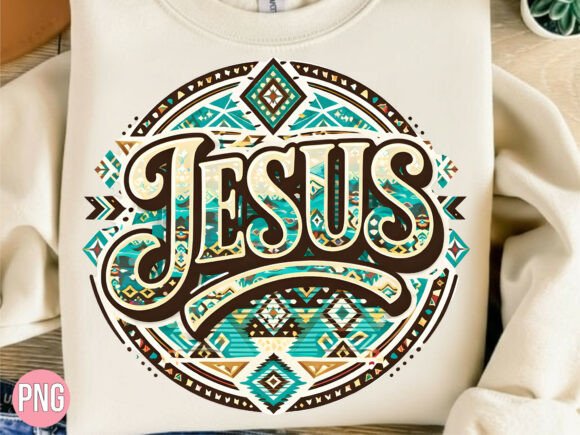
Jesus Western Native Pattern Shirt PNG
A Designer’s First Look: Reverent, Rugged, and Ready for Real Stitching
When I opened Jesus Western Native Pattern Shirt PNG, I didn’t just see a silhouette—I felt its weight. It’s a quiet fusion: sacred reverence meets Southwestern earthiness. The central figure of Jesus is rendered with gentle line work and symbolic motifs—feathers, sunbursts, and subtle geometric borders—that echo Indigenous artistry without appropriation. There’s no clutter, no forced realism—just balanced negative space, intentional line weight, and a composition that breathes across fabric. This isn’t a busy graphic meant for screen printing; it’s a thoughtful machine embroidery design built for texture, dimension, and meaning.
Where It Shines: From Boutique Sweatshirts to Meaningful Nursery Gifts
I tested Jesus Western Native Pattern Shirt PNG on a heavyweight cotton sweatshirt for a local boutique’s holiday collection—and it landed perfectly. The design scaled cleanly at 4.2" wide, holding clarity in the feather details and the soft curve of the figure’s shoulders. On a natural linen tote bag? Equally strong. The open layout lets fill stitch breathe, and the moderate stitch density avoided puckering even without heavy cutaway stabilizer.
It also translated beautifully to a baby blanket project—stitched in ecru thread on ivory fleece. Parents appreciated the calm dignity of the image, and the simplified forms held up even at 3.5". For personalized gifts like baptismal aprons or communion pillow covers, this design adds spiritual warmth without overwhelming the handmade feel. Etsy sellers will find it resonates especially well with customers seeking custom apparel that balances faith and cultural respect—think small shop merchandise for church bazaars, Native-led ministries, or interfaith craft fairs.
Where to Pause: Fabric, Fit, and Functionality
That said, Jesus Western Native Pattern Shirt PNG isn’t universally forgiving—and that’s honest design judgment, not a flaw. On thin jersey t-shirts? I recommend testing first. The outer border elements (especially the fine sun rays) can blur if stitch density isn’t adjusted or if lightweight tear-away stabilizer shifts mid-hooping. On dark fabric, contrast matters: light tan or oatmeal thread reads better than stark white—it keeps the reverence intact without glare.
Caps and curved surfaces need extra attention. The top arc of the design wraps slightly, so I repositioned it lower on the front panel to avoid distortion near the bill seam. And while it works as an embroidered patch, avoid attaching it to highly textured fabrics like bouclé or thick corduroy—the finer inner lines may get lost. For baby embroidery, skip dense satin-stitch eyes or tiny facial features unless you’re confident in your machine’s precision and thread tension.
What Customers Actually Notice (and Why It Matters)
Here’s what stood out when I showed stitched samples to real buyers: they paused. Not because it was flashy—but because it felt *intentional*. That pause builds trust. A customer choosing this for a holiday gift or wedding keepsake isn’t buying decoration; they’re choosing resonance. That elevates perceived value, supports higher pricing for your handmade product, and strengthens brand consistency if you specialize in mindful, culturally grounded designs.
But clarity is non-negotiable. When small details vanish in stitching—like the delicate cross motif tucked into the feather base—it weakens recognition. So before listing on Etsy or prepping for craft fair inventory, ask: does the finished product communicate its meaning at a glance? With Jesus Western Native Pattern Shirt PNG, yes—*if* you honor its scale and simplicity.
Practical Notes Every Embroidery Designer Should Keep Handy
- Always test on scrap fabric first—especially with stretchy knits or textured weaves. Note how the outer motifs hold up after washing.
- Review thread color contrast on both light and dark backgrounds. A warm taupe or charcoal gray often deepens gravitas more than black.
- Confirm hoop size compatibility. This design fits comfortably in a 5x7 hoop, but check spacing if layering with text or secondary motifs.
- Inspect small details under magnification. The inner sunburst uses running stitch accents—ensure your machine handles those consistently.
- Test in black-and-white mockups. If the design loses legibility without color cues, simplify or adjust stitch types.
- Use appropriate stabilizer: medium-weight cutaway for knits, tear-away for stable wovens, and fusible + tear-away for lightweight linens.
- Verify licensing terms before selling finished items or bundling as design assets. This is critical for commercial embroidery and digital embroidery file resellers.
Beyond the Hoop: Why This Design Fits Real Creative Work
Jesus Western Native Pattern Shirt PNG doesn’t shout. It settles—in the quiet pride of a hand-embroidered kitchen towel gifted to a new pastor, in the soft dignity of a nursery wall hanging, in the understated strength of a small shop’s signature tote bag design. It belongs to makers who understand that faith-based embroidery isn’t about volume—it’s about voice, respect, and restraint.
For craft business owners, it’s a versatile anchor: pair it with neutral typography for a clean boutique line, or layer it subtly behind southwestern paisley for seasonal collections. For Etsy sellers, it performs well in search when paired with terms like “Native-inspired Christian embroidery” or “Western faith patch”—but only if your photos show real stitched results, not just PNG previews.
Ultimately, this isn’t just another embroidery file. It’s a conversation starter. A bridge. A reminder that meaningful design lives in the balance between tradition and tenderness—and that the best finished product honors both the stitch and the story behind it.